WORLD NEWS FOR MONTENEGRO DIASPORA
Choose language:


AUTHOR:M.J. GDNUS
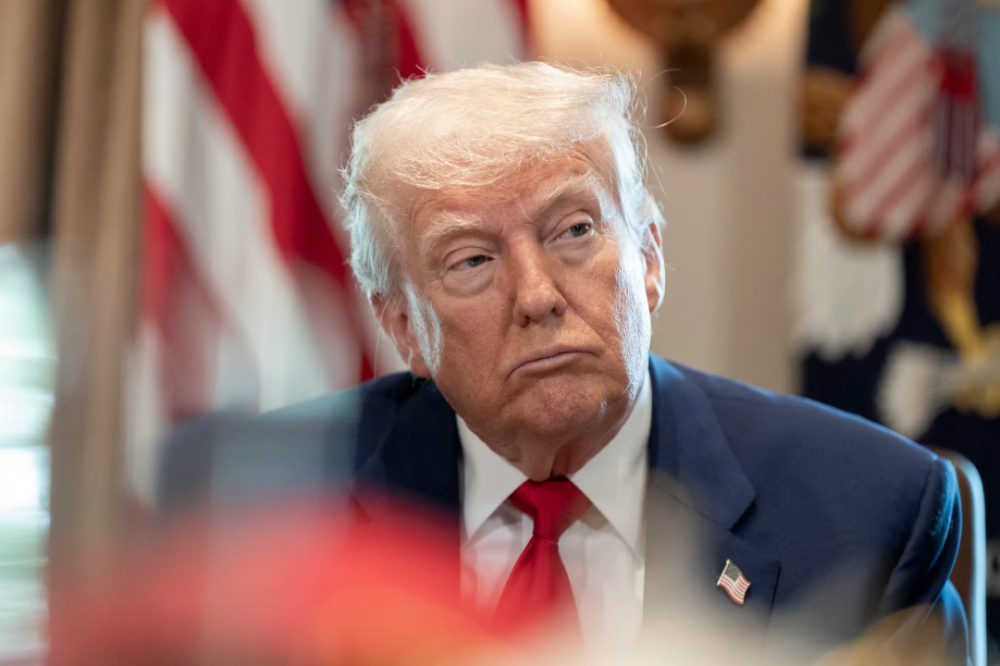
Last night, the US Trade Court issued a landmark ruling blocking President Donald Trump's sweeping tariffs on imported goods, finding that Trump had exceeded his authority by imposing them without Congressional approval.
The Court of International Trade ruled that the US Constitution grants Congress the exclusive right to regulate foreign trade, a power that the president cannot override even in emergencies. The court's decision immediately halts the blanket tariff orders Trump has issued since January and orders their permanent repeal.
"The court does not rule on the wisdom or potential effectiveness of the president's use of tariffs as a means of coercion," the three-judge panel said. "This use is not impermissible because it is unreasonable or ineffective, but because federal law simply does not permit it."
The court ordered the administration to issue new orders within ten days that would comply with this prohibition. The administration responded immediately, filing an appeal and challenging the court’s authority.
The ruling invalidates all of Trump’s tariff measures that relied on the International Economic Emergency Powers Act (IEEPA), which was designed to respond to “unusual and extraordinary” threats in the event of a national emergency. The decision does not apply to other tariffs Trump has imposed on specific industries, such as autos, steel and aluminum, that were imposed under other laws.
Decisions by the New York-based Court of Commerce, which handles international trade and tariff disputes, can be appealed to the U.S. Court of Appeals in Washington, D.C., and then to the U.S. Supreme Court.
Trade policy in turmoil
The tariffs have been a central part of Trump’s trade strategy, disrupting global supply chains and shaking financial markets. American companies, from small to large, have been struggling with the sudden changes in tariff policy and frequent reversals.
A White House spokesman defended the tariffs last night, calling the trade deficit “a national emergency that has devastated American communities, marginalized workers, and weakened our defense industrial base — facts that the court did not dispute.”
“It is not up to unelected judges to decide how to respond to a national emergency,” spokesman Kush Desai said in a statement.
Financial markets reacted positively to the ruling. The U.S. dollar strengthened against the euro, yen, and Swiss franc, while Wall Street and Asian stock indexes rose.
If the ruling stands, it would be a serious blow to Trump’s strategy of using high tariffs, which have ranged from 10% to more than 50%, as a means of pressuring trading partners. The decision introduces additional uncertainty into negotiations with the European Union, China and other countries.
Trump has argued that the tariffs will revive American industry and reduce the $1.2 trillion trade deficit, which have been key points of his economic policy. Without an immediate “tool” in the form of tariffs, the administration may be forced to resort to slower and less aggressive negotiations.
Legal and business resistance
The ruling is the result of two lawsuits: one filed by the nonpartisan Center for Justice and Freedom on behalf of five small American companies that import goods from the countries affected by the tariffs, and the other by 12 federal states.
Among the affected companies are a New York importer of wine and spirits and a Virginia manufacturer of educational kits and musical instruments. They say the tariffs threaten their livelihoods.
“This is not a partial remedy — if the challenged tariff measures are illegal for the plaintiffs, then they are illegal for everyone,” the judges said.
At least five other similar lawsuits against the tariffs are currently pending.
Oregon Attorney General Dan Rayfield, the Democrat leading the federal lawsuit, called the tariffs “unlawful, irresponsible and economically devastating.”
“This ruling confirms that the law must be followed and that trade decisions cannot be made at the personal discretion of the president,” Rayfield said.
Trump has argued that IEEPA gives him broad authority to impose tariffs, even though the law has so far been used mainly to sanction hostile countries or freeze their assets. He is the first U.S. president to attempt to invoke it for tariff purposes.
The Justice Department has sought to dismiss the lawsuits, arguing that the plaintiffs have not yet paid the tariffs and that only Congress, not private parties, can challenge a national emergency under IEEPA.
Trump announced the tariffs in April, citing a trade deficit that he declared an emergency and imposing a 10% general tariff on all imports, with even higher rates for countries with the largest trade surpluses, particularly China. Some of these measures were lifted the following week.
The Trump administration announced on May 12 that it would temporarily ease the highest tariffs on China due to ongoing trade negotiations. The two countries agreed to lower each other's tariffs for at least 90 days.



.jpg)
.jpg)