WORLD NEWS FOR MONTENEGRO DIASPORA
Choose language:


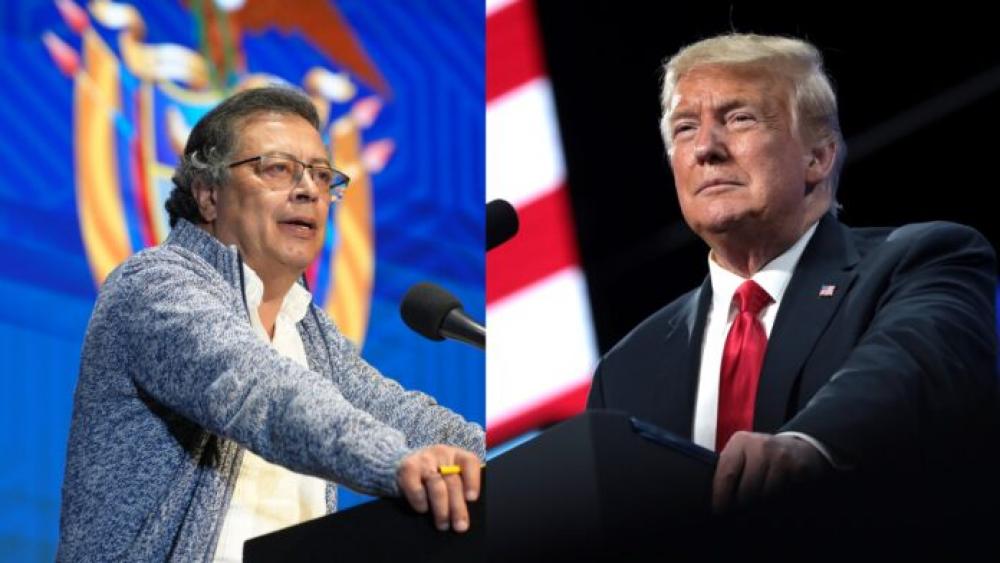
Colombian President Gustavo Petro delivered a forceful warning to former U.S. President Donald Trump after Trump suggested the possibility of military strikes in the region, urging Washington to reconsider any threat of force. Petro cautioned that Colombia “will not be intimidated,” adding a vivid message: “Do not wake the jaguar.”
Speaking during a televised address, Petro criticized Trump’s remarks as reckless and destabilizing at a moment when regional tensions are already elevated. He argued that threats of military intervention undermine cooperation between the two nations and risk igniting broader conflict across Latin America.
Petro emphasized that Colombia seeks strong diplomatic relations with the United States but would not tolerate aggressive rhetoric or actions that challenge its sovereignty. He described Colombia as a nation capable of defending itself and warned that any escalation would have far-reaching consequences.
Trump’s comments, delivered during a rally focused on security and narcotics policy, hinted at the use of military force against drug trafficking operations beyond U.S. borders. His remarks drew swift reactions from several Latin American governments, but Colombia’s response was by far the most direct.
Petro also used the moment to rally domestic support, arguing that Colombia must stand united against external pressure. He framed the situation as a test of national dignity, urging political parties to avoid allowing internal disputes to weaken the country’s position.
U.S. officials have not responded formally to Petro’s remarks, though advisors close to Trump dismissed concerns, saying the former president was emphasizing his long-standing desire for a tougher approach to international crime networks.
The exchange has heightened diplomatic uncertainty in the region and raised questions about how future U.S.–Colombia relations may evolve. Analysts warn that even rhetorical confrontations can strain cooperation on issues like security, migration, and economic development.
For now, both nations appear poised for a tense period of watchful waiting, with regional leaders urging restraint to avoid further escalation.
Author: M.J



.jpg)